


Massage or Reflexology? How to Know What Your Body Needs


Sometimes you know you need a treatment, but you’re not quite sure what to book.
Your shoulders feel tight. Your back has been niggling. You’re tired, stressed, not sleeping particularly well, and generally feel like you need a bit of a reset.
So… do you book a massage or reflexology?
The answer depends on what your body is asking for.
When massage might be the right choice
Massage is often the first thing people think of when they’re dealing with physical tension.
If your neck and shoulders feel tight, your back feels stiff, your legs are heavy after exercise, or you have a particular area that keeps bothering you, massage can be a good place to start.
Depending on what you need, your treatment can focus more specifically on areas of tension or be a slower, more relaxing full-body treatment.
And massage doesn’t have to be painful to be effective.
The aim isn’t to grit your teeth while someone works as hard as possible into a sore muscle. Treatment should always be adapted to you, your comfort level and what your body needs on that particular day.
Sometimes that means working more deeply.
Sometimes it means slowing things right down.
When reflexology might be what you need
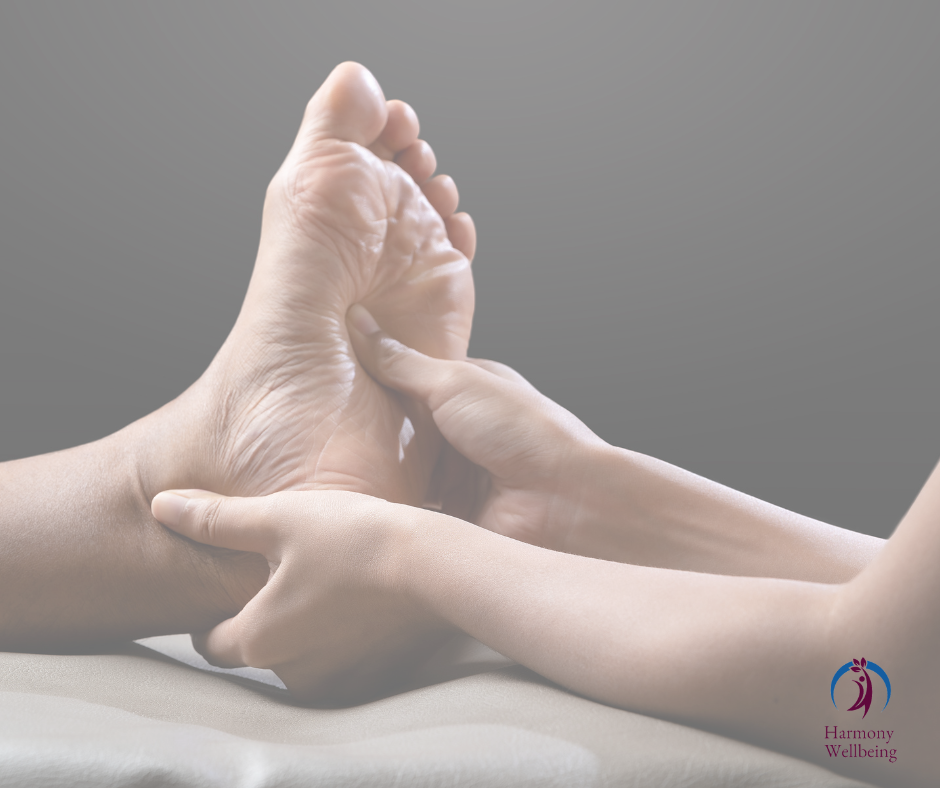
There are also times when you don’t necessarily have one particular sore spot.
You just feel… off.
Perhaps you’re finding it difficult to switch off. Your sleep isn’t great. You’re feeling stressed, tired or overwhelmed, or you simply feel like you need some proper time to stop.
That’s where reflexology can be a lovely option.
During a reflexology treatment, pressure is applied to different areas of the feet while you relax comfortably on the treatment couch.
Many people choose reflexology simply because of how deeply relaxing they find it.
Some of the commonly reported benefits of reflexology include increased relaxation, release of tension, improved sleep, improved mood and an increased sense of wellbeing.
And sometimes an hour where you don’t have to do anything at all is exactly what you need.
What if the tension is caused by more than one thing?
This is where it gets interesting.
That tightness in your shoulders may not just be because of your posture.
Your aching back might not simply be because you sat awkwardly yesterday.
Our bodies respond to everything going on around us.
Long days at a desk, exercise, poor sleep, stress, rushing around, repetitive movements and not giving ourselves enough time to recover can all contribute to how we feel physically.
That’s why I like to look at the bigger picture rather than simply focusing on the place that hurts.
Sometimes the priority is releasing muscular tension.
Sometimes the priority is helping you slow down.
And sometimes you need a bit of both.
Massage or reflexology? You don’t always have to choose
If you’re reading this thinking, “Actually, I could do with both,” there is another option.
I offer combination treatments that include both massage and reflexology, so you can have some focused hands-on work for muscular tension followed by time to completely relax with reflexology.
It can be a lovely choice if you want the physical benefits of massage but also feel as though your whole system needs a chance to settle.
You don’t have to decide between looking after your muscles and taking some time for yourself.
You can do both.
What if I still don’t know what to book?
Please don’t worry about choosing the “wrong” treatment.
You don’t need to arrive with a diagnosis or know exactly which technique you need.
Think instead about how you’re feeling and what you would most like to get from your appointment.
Do you have a particular area that feels tight or uncomfortable?
Would you like help easing muscular tension?
Or are you craving an hour where you can simply switch off and relax?
That gives us a really good starting point.
And if you’re still not sure, just ask.
Moving from tension to balance
Looking after yourself doesn’t always have to start when something hurts.
Sometimes treatment is about easing an ache.
Sometimes it’s about helping your body recover.
And sometimes it’s simply about giving yourself permission to stop for a while.
Over the next few weeks, I’ll be talking much more about reflexology, what happens during a treatment and why so many people choose it as part of their regular wellbeing routine.
With World Reflexology Week coming up from 21–27 September, it feels like the perfect time to explore it a little more.
And if you’ve always wondered whether reflexology might be for you, September could be the perfect time to find out.


Comments